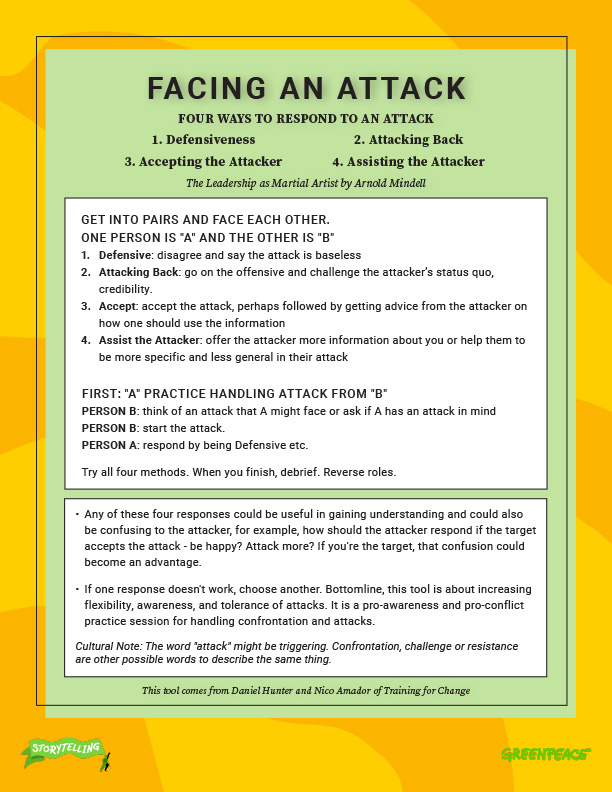
EXERCISE: FACING AN ATTACK
| FOUR WAYS TO RESPOND TO AN ATTACK | |
|---|---|
| 1. Defensiveness | 2. Attacking Back |
| 3. Accepting the Attack | 4. Assisting the Attacker |
1
Get into pairs and face each other. One person is ‘A’ and the other is ‘B’
- Defensive: disagree and say the attack is baseless
- Attacking Back: go on the offensive and challenge the attacker’s status quo, credibility
- Accept: Accept the attack, perhaps followed by getting advice from the attacker on how one should use the information
- Assist the Attacker: offer the attackers more information about you or help them to be more specific and less general in their attack
2
First: ‘A’ practice handling attacks from ‘B’
- Person B: think of an attack that A might face or ask if A has an attack in mind
- Person B: Start the attack
- Person A: respond by being defensive etc. – Try all four methods
- Person B: When you finish, debrief
- Person A: Reverse Roles
- Any of these four responses could be useful in gaining understanding and could also be confusing to the attacker, for example, how should the attacker respond if the target accepts the attack – be happy? Attack more? If you’re the target, that confusion could become an advantage.
- If one response doesn’t work, choose another. Bottomline, this tool is about increasing flexibility, awareness, and tolerance of attacks. It is a pro-awareness and pro-conflict practice session for handling confrontation and attacks.
- Cultural Note: The word “attack” might be triggering. Confrontation, challenge or resistance are other possible words to describe the same thing.
This tool comes from Daniel Hunter and Nico Amador of Training for Change
DOWNLOAD THIS EXERCISE